
What it is
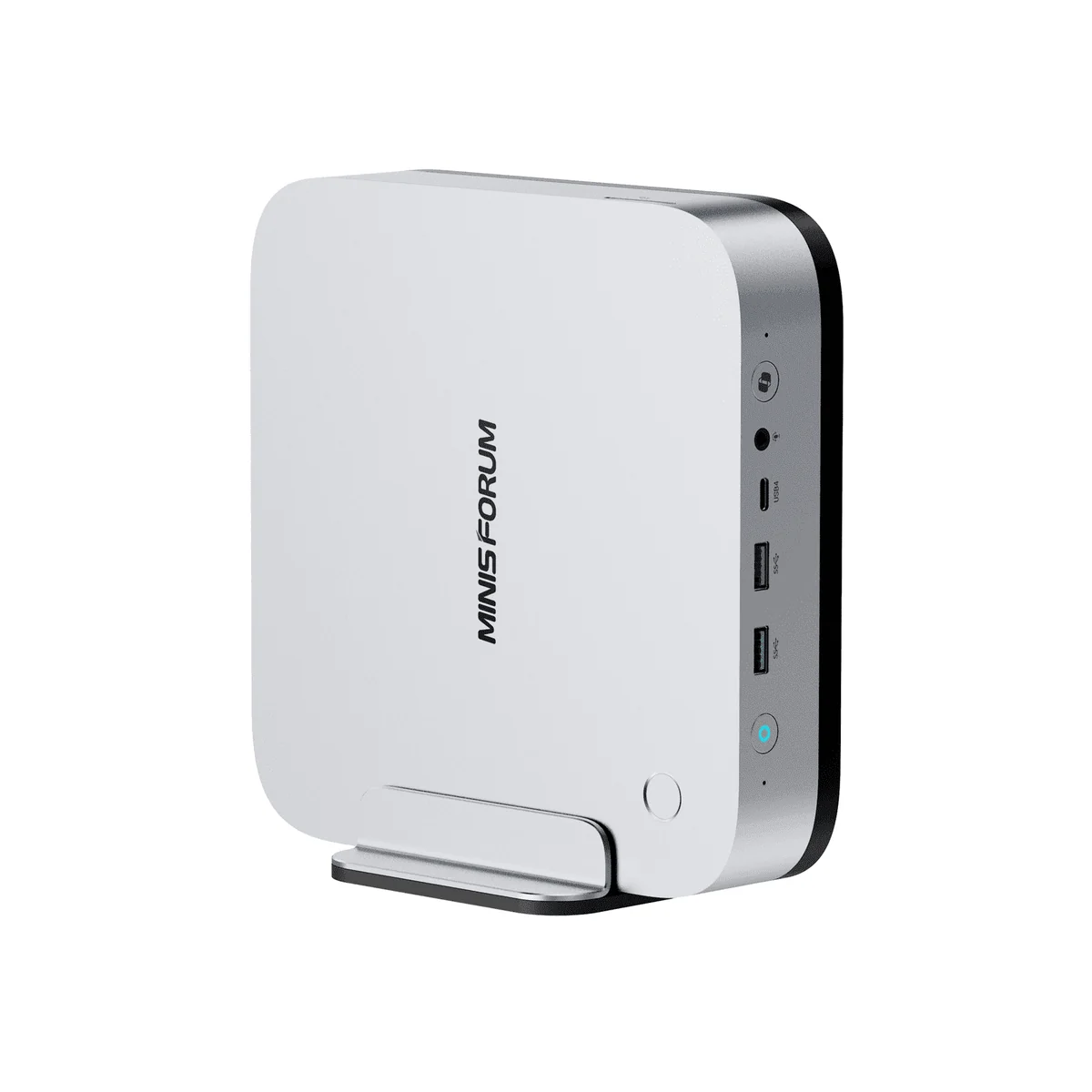
The Minisforum AI X1 Pro-370 is a 1.8-liter mini PC built around AMD’s Ryzen AI 9 HX 370, the first Zen 5 mobile chip to land in a small-form-factor desktop at this price. Twelve cores (four Zen 5 + eight Zen 5c), twenty-four threads, a Radeon 890M iGPU on RDNA 3.5, a 50-TOPS XDNA 2 NPU, three M.2 slots, OCuLink, Wi-Fi 7, dual 2.5 GbE, and a non-detachable internal power supply. It is, on the spec sheet, one of the most complete mini PCs of 2025–2026.
It is also a Minisforum, and that matters more than the spec sheet does. Readers who land on this page comparing the AI X1 Pro-370 to its alternatives should understand what they are signing up for before they click “Buy now.”
What it’s good for (on paper)
On-device AI. The NPU’s 50 TOPS clears the Copilot+ floor; with the iGPU’s compute, the platform total is around 80 TOPS. Local 7B–13B language models via Ollama or LM Studio run at usable token rates on the Radeon 890M, and the 128 GB DDR5 ceiling means larger model weights fit in unified memory. Related: NPU vs iGPU vs CPU for local LLMs on mini PCs.
Office, multimedia, light creator work. Cinebench R23 multi-core lands around 22,800 points (leading the mini PC category as of mid-2026), and Blender BMW27 renders in 143 seconds. Twelve Zen 5 cores chew through Office, browser-heavy workflows, video calls, Lightroom, Photoshop, and 1080p Premiere timelines without complaint.
1080p gaming. The Radeon 890M is a meaningful step up from the 780M generation. Modern AAA at 1080p Medium-to-High lands in the 50–80 fps range, esports above 100. Not a 1440p high-refresh machine; not a 4K gaming machine.
All of that is real. None of that is the reason we cannot recommend this unit.
Build and connectivity
The chassis is full-metal with a perforated top. Dual blower fans handle cooling. Port layout is genuinely generous for a 1.8-liter machine:
- 2× USB4 (40 Gbps): eGPU-capable, 8K display output
- OCuLink: for external GPU docks or NVMe enclosures at PCIe 4.0 x4
- 2× USB 3.2 Gen 2 Type-A, 1× USB 2.0
- HDMI 2.1, DisplayPort 2.0: both 8K @ 60 Hz
- 2× 2.5 GbE Ethernet, Wi-Fi 7, Bluetooth 5.4
- SD card slot, 3.5 mm combo jack
- Three M.2 2280 slots (2× PCIe 4.0 x4 + 1× PCIe 4.0 x1)
The internal PSU is the nicest touch: no 19-volt brick on the floor, no proprietary barrel connector to lose. For a class of product that has spent years apologizing for external bricks, this is a real refinement.
Memory, storage, and upgrades
Base ships at 32 GB DDR5-5600 / 1 TB NVMe; mid-range at 64 GB; top SKU at 96 GB / 2 TB. The 128 GB ceiling needs 2× 64 GB SODIMMs once availability normalizes. Three M.2 slots, total 12 TB possible. A barebones SKU (no RAM, SSD, OS) is sold for users with parts on hand.
Pricing and where to buy
As of late May 2026, Amazon US lists the 32 GB / 1 TB SKU in the $695–$899 range depending on coupons, with the 96 GB / 2 TB configuration around $1,295–$1,350. Minisforum’s own store occasionally undercuts Amazon on the base SKU.
The 3-year factory warranty applies on both channels, in theory. See below.
What we’d flag
This is the part of the review that decides whether the AI X1 Pro-370 belongs on your desk.
Measured weaknesses on this specific unit:
- The SD card reader runs at roughly 24 MB/s, well under the slot’s UHS-II specification, and slow enough that NotebookCheck flagged it as “only suitable for occasional data transfers.” For anyone doing photo or video import work, use a USB4 reader and ignore the built-in slot.
- High DPC latencies under load: NotebookCheck specifically called out the risk for real-time audio production and broadcast workflows. If you record music or stream, this is disqualifying.
- Audible blower fan noise under sustained all-core load: not catastrophic, but louder than the 780M-class units it replaces.
- Only three USB-A ports: the rest of the I/O is USB-C. If you depend on a USB-A dock or legacy peripherals, plan accordingly.
Brand-level concerns specific to Minisforum that this review will not paper over:
- The UM790 Pro shipped dead motherboards in identifiable batches across 2023–2024, with the July 2023 batch being the most-documented cluster. RMAs were inconsistent, and warranty turnaround times stretched well past the published SLA in a non-trivial number of cases.
- The MS-01 has a documented history of VRM fires and thermal paste application defects from the factory. The pattern of “user opens unit, applies their own paste, temperatures drop 15–20 °C” repeats across reviewer threads and reseller forums.
- The NAB9 had a capacitor recall that was handled inconsistently across regions: North American owners received different remediation than EU buyers.
- BIOS updates have bricked units across multiple SKUs (documented here). The recovery path is not always documented and not always free.
- Support response patterns across the company have been unresponsive enough to warrant their own writeup. The 3-year warranty is only as good as the company’s willingness to honor it.
- Chassis warranty denials have been contradictory across cases: same defect, same brand, different outcomes (documented here). EU buyers should additionally be aware of warranty depreciation fees that other brands do not apply.
None of these incidents are specific to the AI X1 Pro-370. All of them are specific to the company that builds the AI X1 Pro-370. A buyer choosing this unit is implicitly accepting that, if something goes wrong, the support experience may be the one documented in the articles above.
Minisforum AI X1 Pro-370 verdict: we do not recommend
The AI X1 Pro-370 is, in pure spec-sheet terms, a very good mini PC. The Zen 5 silicon is genuine, the OCuLink is genuinely useful, the internal PSU is genuinely refined, and Cinebench scores genuinely lead the category.
We still do not recommend buying it. Three reasons:
-
The Beelink SER9 HX370 ships the same Ryzen AI 9 HX 370 chip in a smaller chassis with comparable specs at roughly the same price, with a support track record that is, while imperfect, materially better-documented and more responsive than Minisforum’s. For the local-LLM and 1080p-gaming buyer, that is the unit to put on the short list. Our Beelink SER9 HX 370 review.
-
The Geekom A8 Max sits one CPU generation behind (Ryzen 9 8945HS) but at $580–$725 with a 3-year warranty Geekom has honored consistently across the markets we have reviewer evidence for. For the office-and-light-AI buyer who does not need Zen 5 specifically, the A8 Max is the safer purchase. Our Geekom A8 Max review.
-
The premium you pay for the AI X1 Pro-370 over those alternatives buys you Zen 5 cores and OCuLink (both real upgrades), but also buys you Minisforum’s post-sale support, which is the part of mini PC ownership the spec sheet does not show. The reliability tax is not theoretical. It is documented in the articles linked in the section above.
If you have a specific workflow that genuinely requires Zen 5 + OCuLink + 128 GB unified memory and you have a strong stomach for self-supporting the device, the AI X1 Pro-370 is the unit that ships that combination first. For everyone else, the alternatives win on the metric that matters most over a three-year ownership window: the company on the other end of the warranty email.
The AI X1 Pro-370 is a strong mini PC. It is not a strong purchase.