
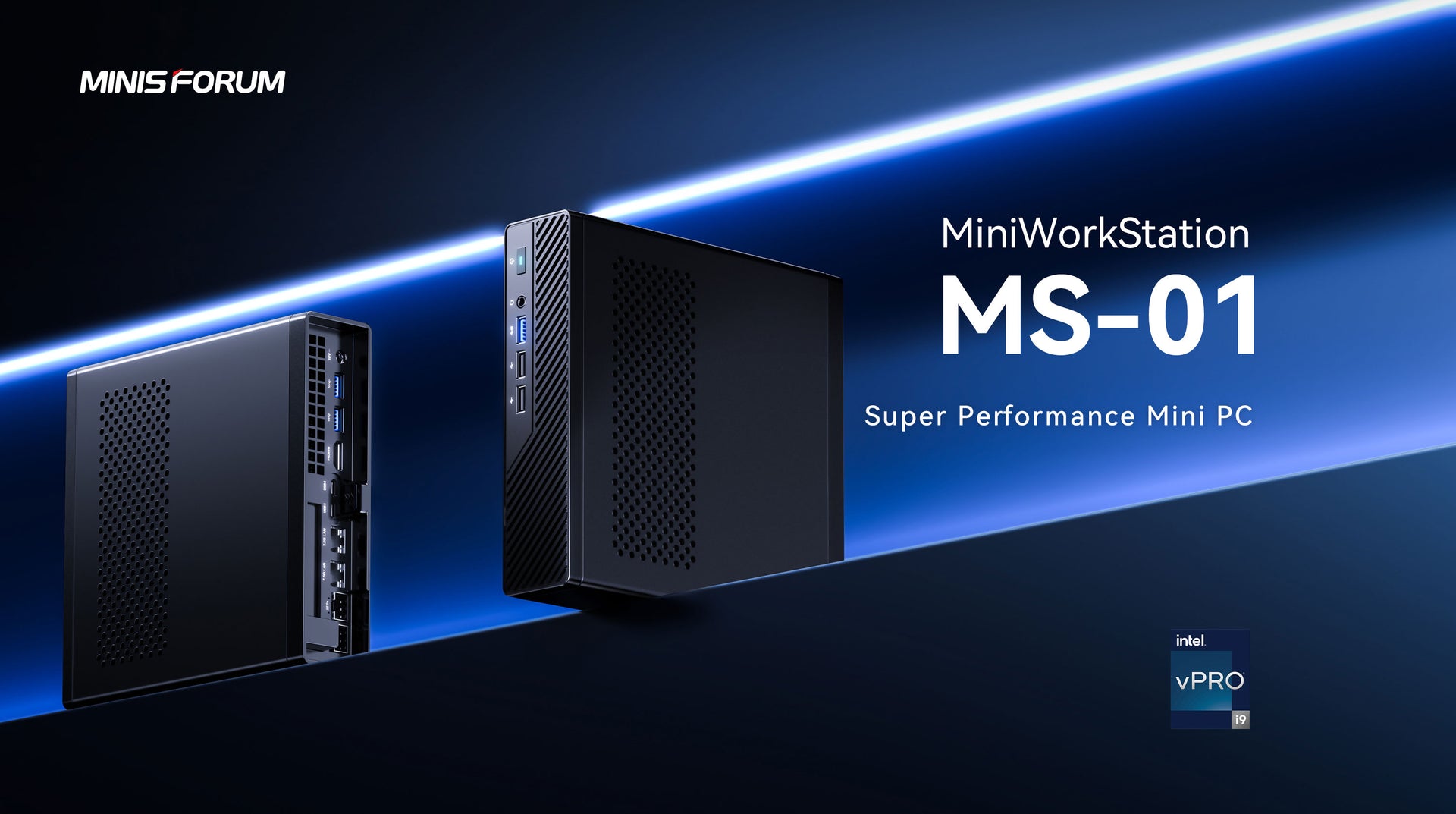
It is important to say at the outset that what follows is one documented case, not a fleet-wide recall. A single user on the Level1Techs forum, troubleshooting intermittent system freezes, opened his MS-01 barebone and found visual evidence of fire on part of the voltage regulator module (the power-delivery circuitry that steps wall voltage down to the levels the CPU and memory consume). That is a specific individual customer’s MS-01, not a batch-wide fire pattern. Anyone citing this incident as proof of a mass safety hazard is overreaching the evidence.
That qualification matters. It also does not dissolve the story.
What the Minisforum MS-01 owner found
The Level1Techs thread is, in the owner’s own words, a troubleshooting narrative that took a hard turn when he went looking for the mechanical root cause of worsening stability: “I’ve been having some stability issues with my MS-01 13900H barebones unit and during the course of it getting worse and troubleshooting I discovered the likely cause, part of the VRM seems to have caught fire.” That is a verbatim quote. It is unambiguous. The owner did not write “it overheated” or “the capacitor bulged.” He wrote that part of the VRM seems to have caught fire, and posted to a community forum asking for help with what came next.
What came next was not straightforward. By the same owner’s account in the same thread, resolving the replacement took approximately a month and a half, required “emailing them more than once a couple of times to get things moving,” and ultimately produced a new unit, but the new unit was drop-shipped from Amazon, not sent by Minisforum directly. The original purchase had been made through Amazon, and it was Amazon’s A-to-Z replacement pipeline that ran the logistics. Minisforum’s warranty, in the account as written, was the secondary path that came after the retail channel’s policy forced the outcome.
The pattern the single case sits in
Around the VRM-fire case is a broader pattern of under-load instability on MS-01 units with 13th-generation Intel silicon. The ServeTheHome forums heating-problem thread captures the recurring experience of owners whose i9-13900H units misbehave under sustained load, with thermal behaviour that ranges from elevated idle temperatures to workload-triggered shutdowns. The Proxmox forum thread on 13th-gen MS-01 shutdowns documents owners describing machines that simply stop under hypervisor load: not fire damage, but the kind of power-delivery-and-thermal stress pattern that can, over time, produce it.
The VRM incident therefore is not an outlier detached from the MS-01’s normal behaviour. It is the severe end of a distribution whose middle is “my i9 crashes during a VM build” and whose typical resolution is a BIOS update that the customer had to ask for by name rather than receive automatically.
Related: the MS-01’s factory thermal paste application and whether repasting voids the MS-01 warranty.
What “2-year warranty” bought
Minisforum’s marketing communicates a 2-year warranty as a trust signal. In the abstract, that is a real commitment. In the MS-01 VRM case, what the customer experienced was:
- A month and a half of back-and-forth to move the claim, documented in the owner’s own timeline.
- Amazon’s retail policy, not Minisforum’s warranty, as the primary remedy. The replacement shipped through Amazon because the original purchase path supported it; if the owner had bought direct, this story would read differently.
- No structured safety communication. The user’s forum post is the public record. No recall, no advisory, no warranty letter went to other MS-01 i9-13900H owners asking them to inspect or return.
This matters for the next customer in two concrete ways. First, the value of the 2-year warranty compresses substantially when the fastest working path to a remedy is the retailer rather than the manufacturer. Second, a physically fire-damaged VRM is the kind of incident that, in most regulated markets, triggers at minimum a batch inspection; in this case, a single consumer community thread is where the evidence lives.
What the honest reader should take away
One documented fire on one customer’s MS-01 does not prove the MS-01 is unsafe. It does prove that when the failure mode is as severe as it can reasonably get, the vendor’s support apparatus is the slow path and retail channel dispute resolution is the fast one. That is an uncomfortable thing to learn from a $900 purchase, and it is the exact thing a buyer is trying to avoid when they pay for a brand rather than assemble one themselves.
If you own an MS-01 with a 13th-generation i9 CPU, update the BIOS, watch your thermal numbers, and, if it matters to you, buy it through a retail channel whose dispute resolution you trust more than the manufacturer’s. That last sentence should never have been necessary to write about a shipping product, which is exactly why it is the one worth keeping at the end.