
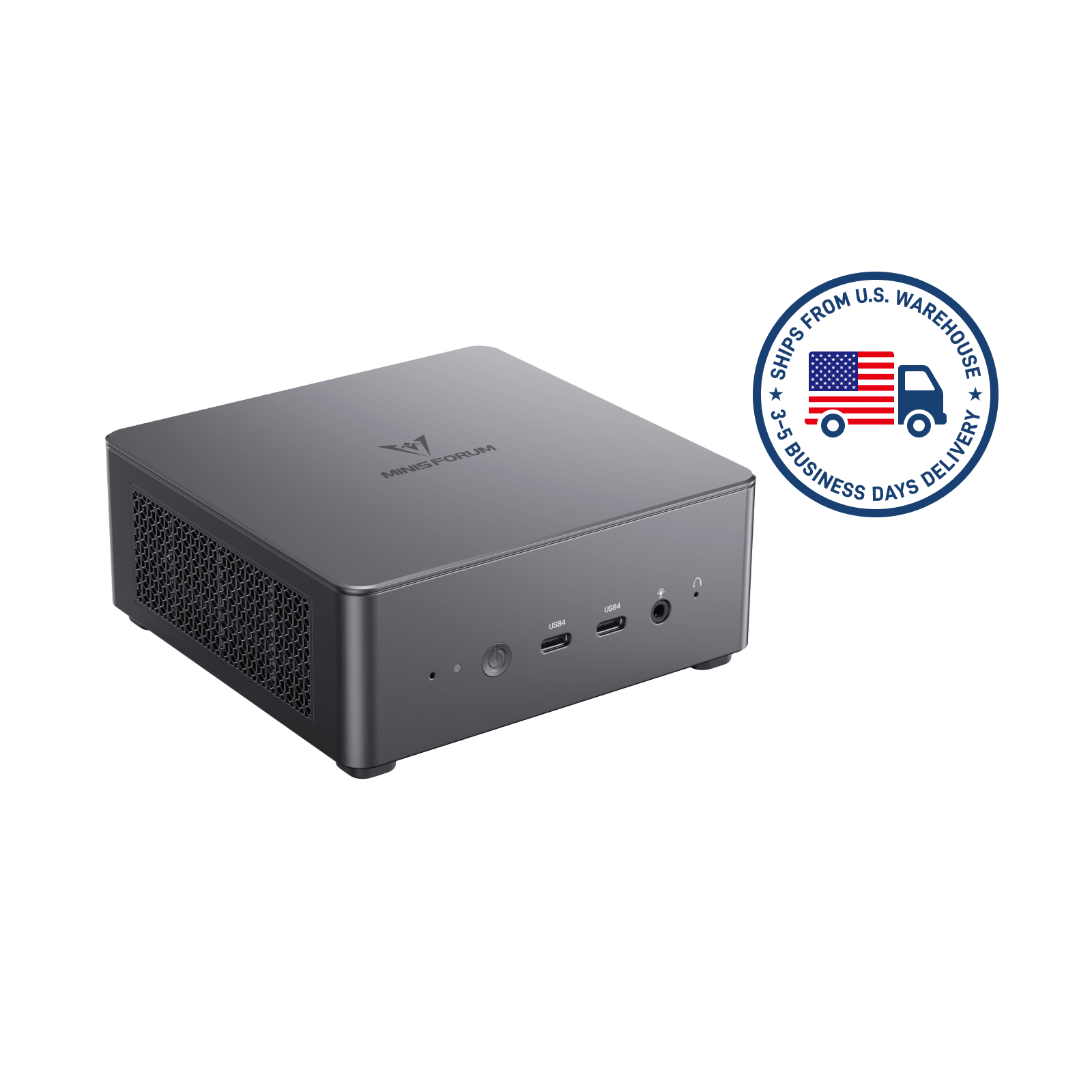
In fairness to Minisforum, the HX90 story is old (a 2021 product, a 2021 incident), and the company did respond. When the allegations went public, they issued a statement. They changed their messaging. They moved on. Companies are allowed to make mistakes and correct course, and any watchdog site that treats every old scandal as a present accusation stops being useful to anyone. The nuance is real.
It is also not the whole story. What happened when the EliteMini HX90 actually hit an independent lab is a separable question from how Minisforum responded afterwards, and the answer to it is the part that is still worth writing down, because it describes what quality control at the company looked like when nobody was supposed to be watching.
What Gamers Nexus found inside the Minisforum EliteMini HX90
Minisforum marketed the HX90 (their Ryzen 9 5900HX flagship mini-PC at the time) with one standout thermal claim. The unit used liquid metal as the thermal interface between the CPU die and the heatsink. Liquid metal is a conductive paste, usually gallium-based, that dramatically outperforms standard thermal compound on high-TDP chips. It is also difficult to apply correctly, because it is electrically conductive: a stray droplet that touches an exposed component can short traces or destroy a board. A vendor claiming “liquid metal TIM on a shipping product” is making a strong, serious, expensive promise.
Gamers Nexus, the most rigorous independent test lab in the enthusiast PC space, received two separate review samples of the HX90. According to coverage by SFF.Network, neither sample had liquid metal connecting the CPU die to its cooler. What they found instead, on at least one of the units, was liquid metal that had been applied elsewhere inside the chassis (splattered in a way that would have been dangerous if the unit had been operated), but not on the thermal interface where the marketing said it would be, and the thermal interface that was there was ordinary compound.
That is a serious finding on its own. It became a worse one when the lab continued to examine the build. The AMD-Now summary of the reveal captured the secondary points: the exterior, marketed as carbon fibre, was injection-moulded plastic with a carbon-pattern texture. And the screws that a customer would need to remove to service the machine were security-Torx bits, an unusual choice for a product also marketed as “user-upgradeable.”
Two review samples. Neither with the advertised thermal interface. One with dangerously-placed liquid metal in the wrong location. A chassis whose material claim was cosmetic rather than structural. Fasteners that actively worked against the service story. This was not a single bad unit.
Minisforum’s response
The company responded publicly. VideoCardz covered the statement: Minisforum’s position was that the review samples were the wrong units (misprinted, mis-boxed, or otherwise not representative of retail production). They committed to ensuring retail HX90s would have the advertised thermal interface. They apologised for the confusion. In a follow-up item, Gamers Nexus’ HW News recap acknowledged the response and moved on.
That is a functional corporate response. It is also a response whose verification has a hole in the middle.
The hole in the verification
If the retail units were supposed to have what the review samples did not, the question that follows is: did anyone independently cut open a retail HX90 to confirm? The public record does not contain a Gamers Nexus follow-up on a retail-purchased HX90 with a liquid-metal-confirmed interface. It contains the original allegation, Minisforum’s statement, and the industry’s collective decision to let the story drift. Nobody had an economic reason to buy an HX90 at retail with their own money just to verify whether the promised thermal interface was actually there. The fact-checking ended where the press-release ended.
The reason that matters five years later is that it was allowed to set the pattern. A product page claim that is material to product performance, that is contradicted in a lab by two independent review units, and that is resolved by the vendor’s word rather than by independent retest, produces a trust pattern that the next controversy inherits. The NAB9 capacitor recall of 2024–25 happened in a world where Minisforum’s prior credibility floor was a story like this one. The MS-01 thermal paste conversations of 2024 happened in the same world. Related: how Minisforum handled the UM790’s aluminium case and Wi-Fi.
What the honest reader should carry forward
It is fair to say Minisforum changed. It is also fair to say we don’t know, with verifiable evidence, whether retail HX90s ever got what they were sold. What the HX90 story leaves behind isn’t “Minisforum is a scam company”; that framing is too lazy to be useful. What it leaves behind is a precedent: on this product, at this time, the thing the marketing promised was not in the box that shipped to reviewers, and the remedy was an unverified statement rather than an unverified retest. Every subsequent Minisforum marketing claim has a slightly heavier burden of proof because of it, and the customers who keep paying the brand premium for the next product are the ones still carrying the tab.