
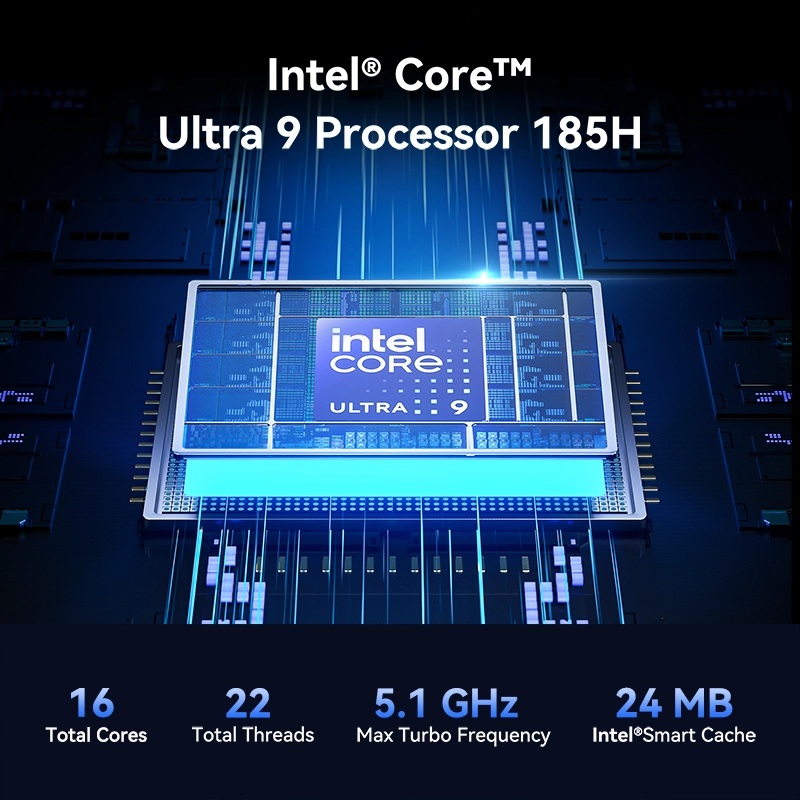
There is a version of the Geekom Mini IT13 story that flatters the brand, and it is worth telling first because it is also true. Geekom built a tidy, attractive 4x4 mini PC, finished it well, priced it aggressively, and put one of the most marketable mobile CPUs of its generation inside: Intel’s Core i9-13900H. Most of the professional press that touched the unit said positive things about its build quality, its connectivity, and its short-burst responsiveness. The machine looks, on the spec sheet, like a desktop replacement that fits in one hand.
What the spec sheet does not survive is sustained load. Four independent reviewers, working in different labs with different methodologies, reached the same conclusion about the IT13’s cooling solution, and the conclusion is unkind.
Geekom Mini IT13 thermals: what four reviewers found
NotebookCheck’s review put the verdict in the title (“Mini Desktop with an overkill Core i9”) and in the conclusion: “The Mini IT13 is a powerful mini PC with a lot of power crammed into its tiny shell, but this power cannot fully be tapped due to some noticeable thermal throttling.” That is the polite version.
AnandTech was less polite. In its dedicated thermal characteristics page, the reviewer wrote that “the PL2 value of 80W doesn’t appear reasonable for the cooling solution, as the temperature approaches 100C+ within a couple of seconds of load application.” Allocating power to the integrated GPU made things worse: “the package temperature again touching 100C+ before the thermal solution can catch up, and the iGPU does undergo intermittent throttling.”
Liliputing described the same loop in the same numbers: “When PL1 was set to 80 W the temperature was continuously reaching 100°C, which resulted in thermal throttling trimming the frequency to prevent a shutdown and dropping the temperature by a degree, only for the frequency to then increase and the cycle repeat.” That oscillation pattern (heat spike, frequency cut, recovery, heat spike) is a textbook description of a chassis that is fighting its silicon and losing.
CNX Software ran the synthetic gauntlet and found the same: “3Dmark Fire Strike GPU benchmark did make all six P-cores throttle, and AIDA64’s system stability test caused all six Performance cores to throttle.” Even the launch of 3DMark, before any benchmark ran, caused two cores to throttle on initialisation.
Four reviewers. Four labs. The same finding. That is no longer a sample-of-one anomaly; it is the cooling design.
How Geekom made the numbers look acceptable
The interesting part of the story is what the system does after the first thermal cliff. Once the first ten to twenty seconds of full-fat boost are over, CNX Software noted that the IT13 settles into a sustainable 74–83°C P-core range, but only because power limits, not the thermal solution, take over. The chip stops being a 13900H and starts behaving like a much smaller part. CNX’s analysis pinned the trick: PL1 is configured at 35W against Intel’s 45W base power for the SKU, “set low to help with cooling and maybe to allow a lower fan curve to lessen the noise.”
That is a defensible engineering decision. It is also a marketing problem. The customer who reads “Core i9-13900H” on the product page is buying the chip’s full datasheet behaviour. What they actually receive is a 35W-PL1 derated configuration that cannot hold its boost long enough to finish a benchmark cleanly. Nothing on Geekom’s product page communicates that derating in plain language.
The pattern continues into newer hardware
The IT13 is not the only Geekom unit where reviewers and customers have flagged this. Geekom’s own community forum hosts a thread titled simply “Geekom A7 Thermal Throttle”, and independent reviews of the Geekom A8 with the Ryzen 7 8745HS document the same compression curve: short-term boost up to 60W of package power, sustained operation around 35W, and a measurable performance drop on hours-long workloads. The IceBlast cooling system Geekom markets as the answer to all of this is, in NotebookCheck’s wording, optimised for “short performance peaks”, not for sustained load.
The 2026-edition product page for the IT13 now advertises an “IceBlast 2.0” cooler that “keeps the system ice-cold even during 24/7 heavy use.” Independent retesting of that claim, at the time of writing, has not appeared. The original IT13 chassis design (the one buyers have been receiving for two years) is the one that four reviewers measured running at 100°C+ within seconds. Related: our Geekom IT13 Max review, Geekom A8 Max review and Geekom GT13 Pro review.
The warranty backdrop
A throttling product is forgivable when the warranty path is clean. Geekom’s is uneven. Recurring complaints on its Trustpilot page describe units that died inside the warranty window, response times measured in weeks, and, most pointedly, a refusal to honour warranty service on units bought from authorised third-party retailers when Geekom cannot find the order in its own system. One Trustpilot pattern that has surfaced repeatedly in IT13 threads is a motherboard power-input failure that Geekom does not supply spare parts for, leaving the customer to negotiate a full replacement or absorb the loss.
The combination matters. A mini PC sold on the strength of a Core i9 badge, derated in firmware, throttling under any sustained load that touches that badge, and supported by a warranty operation that several customers report as inconsistent: that is not the deal the marketing implies.
The takeaway
Geekom did not lie about the IT13. The Core i9-13900H is in the box, and the box does cool it well enough to pass a benchmark suite that tolerates a frequency dip. What Geekom did, and what four reviewers documented in print, is build a chassis whose thermal solution cannot match the chip’s nameplate behaviour, then ship it with power limits low enough to hide the gap on average benchmarks. Buyers who run sustained workloads (encoders, compilers, hours-long renders, anything that does not look like a 30-second sprint) are paying Core i9 prices for a thermally-bottlenecked Core i7 experience. That is the version of the IT13 the next buyer should know about before the order ships.