
The context has to come first because it is load-bearing. The Intel Raptor Lake instability (a class of crashes, hangs, and long-term chip degradation affecting a swath of 13th and 14th generation Intel Core desktop and mobile silicon) is not a Minisforum-authored problem. Intel caused it, Intel confirmed it, and Intel extended warranty coverage on affected SKUs after the root cause was identified as a combination of the eTVB (enhanced Thermal Velocity Boost) algorithm and a VMin Shift degradation mechanism in the affected cores. Buyers whose Raptor Lake chips have behaved erratically over the past two years have a legitimate grievance with the silicon vendor first and foremost. That is the fair frame.
The reason it is worth writing about Minisforum anyway is that, of all the ways a hardware vendor can respond to a known upstream bug on the silicon they sell, Minisforum picked one of the quieter ones, and their customers are still living with the downstream of that choice.
How the Minisforum MS-01 was affected
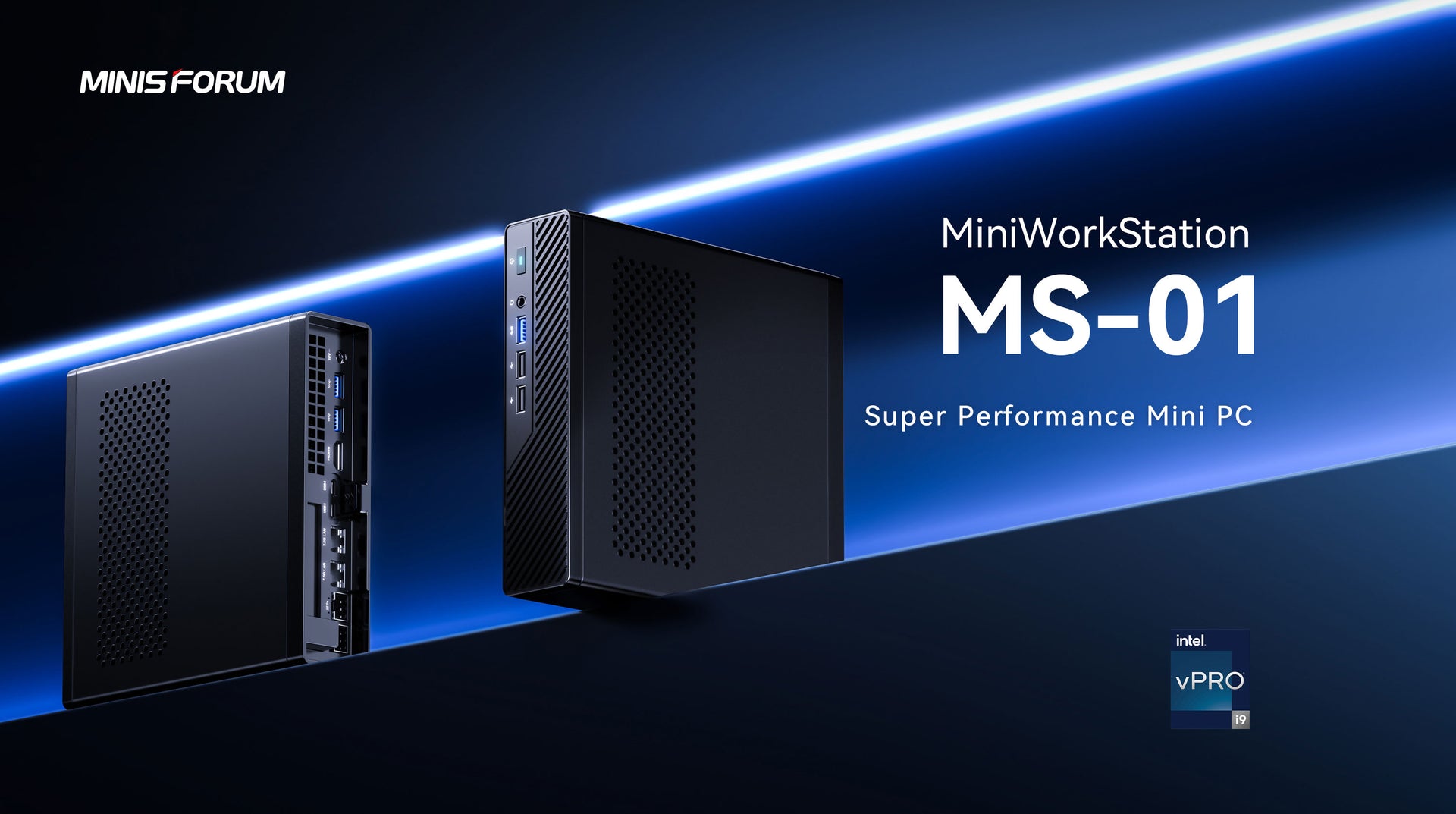
The MS-01 launched with Intel’s Core i9-13900H and Core i5-13500H as its top two CPU configurations. Both are 13th-generation Raptor Lake parts. Both fall into the range of Intel SKUs for which the Intel Community forum has documented user-reported instability patterns consistent with the company’s eventual eTVB / VMin Shift acknowledgement, and which VideoCardz’ 2024 coverage described as an industry-wide investigation.
In the MS-01’s specific context, the pattern shows up in two flavours. NotebookCheck’s workstation-class review of the MS-01 with i9-13900H documented unpredictable crashes during multi-loop Cinebench runs, exactly the sustained-load test that surfaces Raptor Lake’s voltage-and-boost misbehaviour. The XCP-ng forum thread on MS-01 instability under hypervisor load captures the other flavour: machines that appear fine under desktop workloads, then hang or reboot when asked to run a virtualization-class workload that keeps many cores busy for extended periods.
None of this is evidence of MS-01-specific hardware faults. It is evidence of Raptor Lake hitting Raptor Lake’s silicon limits, in a chassis that has no unusual thermal or power characteristics that would make the silicon behave differently than it does elsewhere. Related: Intel i226-V 2.5GbE instability on the MS-01 and MS-A2 and the MS-01’s factory thermal paste.
What Minisforum did, and what it didn’t write down
Minisforum has shipped BIOS updates for the MS-01 during the period in question. Some of those updates contain microcode revisions that, in the downstream record, correspond to the microcode Intel supplied to address the Raptor Lake behaviour. That is the good-news half of the story. MS-01 owners who kept their BIOS current have, by and large, benefited from the mitigations that eventually shipped upstream.
The less-good half of the story is that Minisforum’s BIOS release notes, at the point most of this was rolling out, did not say any of that. A customer reading the notes saw version numbers, lists of changes phrased in generic language (“improved stability,” “updated microcode”), and no explicit statement that the update addressed Intel’s acknowledged CPU bug. A customer who was not tracking the industry-wide Raptor Lake story had no way to tell whether their unit’s instability was being fixed by the update in front of them. The decision about whether to flash a BIOS (a non-trivial act on a 1.9-litre mini-PC that can brick if it fails) was being made without the information needed to weigh the tradeoff.
The information the customer needed
A good BIOS release note in this specific scenario would have said three things, in plain language:
- The bug being addressed. “This update includes Intel microcode revision XXX, which addresses the Raptor Lake eTVB / VMin Shift instability described by Intel in advisory YYY.”
- The affected units. “MS-01 configurations with i9-13900H and i5-13500H are in scope. Configurations with i9-12900H are not affected.”
- What the user should expect. “Before updating, if you have experienced unexpected hangs during sustained load, this update is recommended. After updating, performance under sustained load may differ by up to N% from prior BIOS versions due to revised boost behaviour.”
None of that appeared. It was, in each case, the customer’s job to read Tom’s Hardware, Ars Technica and the Intel Community thread, translate what they read into their own BIOS-update decision, and hope the translation was accurate. Some buyers made the translation correctly. Others stopped updating firmware entirely, because the trust required to flash the BIOS without clear release notes was higher than they had to spare.
The structural complaint
It is genuinely unfair to blame a mini-PC vendor for Intel’s silicon bug. What is fair to blame them for is the cadence and candour of their communication with the customers who paid for the silicon through them. Minisforum’s pattern on the MS-01 Raptor Lake story was to ship the fix without naming the problem, a style of communication that works for a customer base that reads enthusiast forums daily, and fails every other customer. Two years into the lifecycle of these parts, there are MS-01 owners who still do not know whether their BIOS contains the Raptor Lake mitigations, because the documentation they would need to verify it was never written. That silence isn’t a bug in the silicon. It was a choice by the vendor who sold the silicon to them.