
What is the Lenovo RTX Spark mini PC?
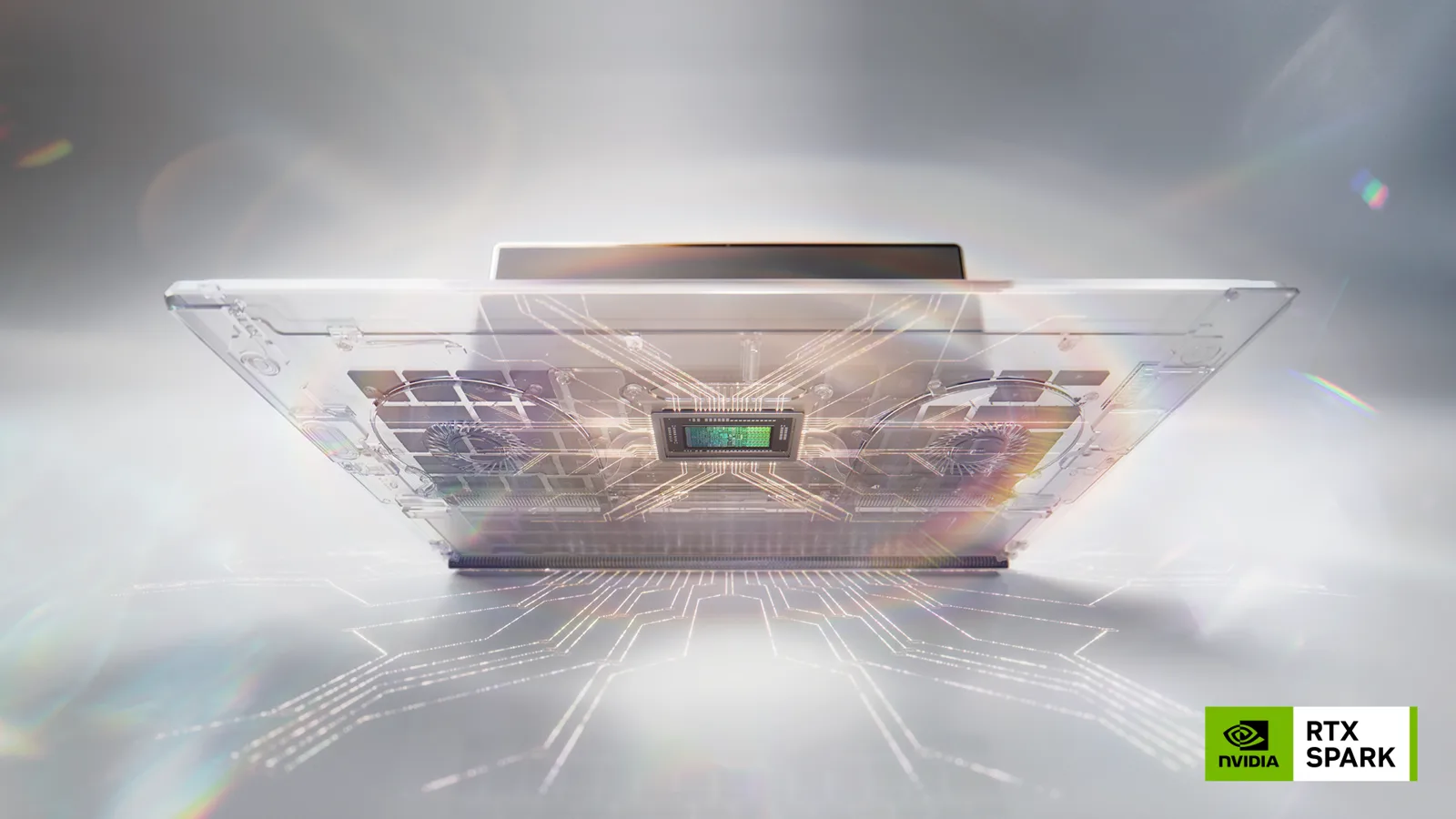
The Lenovo SFF RTX Spark is a small-form-factor mini PC that Lenovo quietly revealed at Computex 2026, built on NVIDIA’s new RTX Spark platform. It is one of a wave of RTX Spark boxes (alongside the ASUS ProArt GA10, Dell XPS RTX Spark Desktop and MSI EdgeMesa) that put NVIDIA’s Grace-plus-Blackwell silicon into a desktop the size of a thick paperback.
A quick but important caveat up front: “Lenovo SFF RTX Spark” is a working name, not a final retail brand. Lenovo is one of the few OEMs that has not published a formal press release for its RTX Spark machine, so the model name, price and exact launch date are all still unconfirmed. What follows separates what NVIDIA and Lenovo have actually shown from what remains a blank.
The interesting angle here is not just another Grace Blackwell box. It’s that RTX Spark ships in two tiers, the N1x and the N1. That gives NVIDIA’s mini-PC silicon something it didn’t have before: a price ladder.
What’s confirmed: RTX Spark specs and architecture
RTX Spark is NVIDIA’s consumer, Windows-on-Arm respin of the same GB10 Grace Blackwell superchip that powers the on-sale NVIDIA DGX Spark and ASUS Ascent GX10. This is the same die family, not a “GB10 v2” or a next-generation chip. NVIDIA has simply recast the part for the high-end PC market, pairing it with Windows and pitching it at creators and gamers rather than only AI developers.
Across the RTX Spark systems shown at Computex, the confirmed top-end specifications are:
- Up to 20 Arm-based cores (Grace microarchitecture)
- Up to 6,144 Blackwell CUDA cores (48 SM integrated GPU)
- Up to 128 GB LPDDR5X unified memory, shared between CPU and GPU
- Up to 300 GB/s of memory bandwidth
- Up to 1 petaflop of FP4 AI performance
- PCIe Gen5 x4 M.2 storage
- 10 Gb Ethernet and Wi-Fi 7 + Bluetooth 5.4
For the Lenovo unit specifically, the standout detail is the all-rear I/O layout. NotebookCheck’s hands-on reports a clean, cable-management-friendly rear panel with:
- 1× USB-C for Power Delivery
- 2× USB-C running at 20 Gbps for data
- 1× HDMI video out
- 1× 10 Gb LAN
ServeTheHome notes Lenovo appears to have designed a new chassis for this machine rather than reusing its existing ThinkStation PGX shell. NVIDIA pitches the platform at “12K” video editing and 1440p AAA gaming, workloads that lean on the unified memory pool and Blackwell GPU rather than raw CPU clocks.
N1 vs N1x: the two-tier ladder
The “up to” qualifiers matter because RTX Spark is two chips, not one:
- N1x: the higher tier, with up to 20 Arm cores. Per a pre-launch spec leak, it is essentially a rebranded GB10: the same silicon as DGX Spark, now aimed at premium Windows desktops.
- N1: the standard tier, with 12-core and 10-core configurations, fewer CUDA cores, and presumably less memory. This is the more affordable entry point.
It is not yet confirmed which tier (or tiers) the Lenovo SFF box will ship in. But the existence of an N1 alongside the N1x is the first sign that NVIDIA’s mini-PC silicon will span more than a single ~$3,000–$4,000 price point.
What’s still unknown
Plenty. Treat anything not in the list above as unconfirmed:
- Final model name. “SFF RTX Spark” is descriptive, not a SKU. Expect a ThinkStation or ThinkCentre-style brand at retail.
- Price. Lenovo has announced nothing. The reference GB10 boxes sell for roughly $3,000–$4,700, but an N1-tier Lenovo could land lower.
- Which N1/N1x configuration(s) Lenovo will offer, and the exact RAM/storage options.
- Exact launch date. The platform is broadly targeted at fall 2026, but Lenovo has not committed to a date.
- Storage capacity, cooling design and acoustics: none detailed yet.
What it means for mini PCs
For three reasons, this reveal matters more than a single unannounced Lenovo box.
First, a second tier changes the math. Until now, Grace Blackwell mini PCs were uniformly expensive developer tools. An N1 tier with 10–12 cores hints at a cheaper on-ramp to the same CUDA-on-Arm ecosystem, closer to a mainstream creator desktop than a $4,000 AI appliance.
Second, Windows-on-Arm is the headline. DGX Spark runs NVIDIA’s DGX OS (Arm Linux); RTX Spark is pitched as a Windows machine. That’s a very different buyer: someone who wants Premiere and games, not just nvidia-smi and PyTorch.
Third, the 300 GB/s bandwidth ceiling still applies. Unified memory is generous at 128 GB, but ~300 GB/s is far below a discrete RTX card’s bandwidth. As with the DGX-class boxes, expect memory bandwidth, not compute, to be the real limiter for token-generation throughput. Big models will fit; they won’t necessarily fly.
Lenovo SFF RTX Spark: expected timeline and price outlook
No price has been announced for the Lenovo SFF RTX Spark, and no firm ship date. The broader RTX Spark rollout is targeted at fall 2026, with 10-plus desktops and 30-plus laptops across vendors. ServeTheHome characterizes these as “premium systems,” so even the N1 tier is unlikely to be cheap by mini-PC standards.
Our read: the N1x/Lenovo variants will track close to today’s GB10 pricing, while any N1-based configuration is the one to watch for a more accessible entry point. We’ll update this piece the moment Lenovo publishes an official name, spec sheet or price. Related: our analysis of DGX Spark 64GB pricing and what it means for RTX Spark.
Sources & caveats
This is a preview of an unreleased, preliminarily-named product. Every spec above is drawn from Computex 2026 reveals and pre-launch reporting, not a retail unit, and Lenovo has issued no press release of its own. Names, prices and dates will change.
When it ships, we’ll put it through the same testing as its on-sale siblings. In the meantime, if you want a Grace Blackwell box you can actually buy today, read our reviews of the NVIDIA DGX Spark and the ASUS Ascent GX10, the GB10 machines the RTX Spark platform is built from.