
What is AMD Medusa Halo
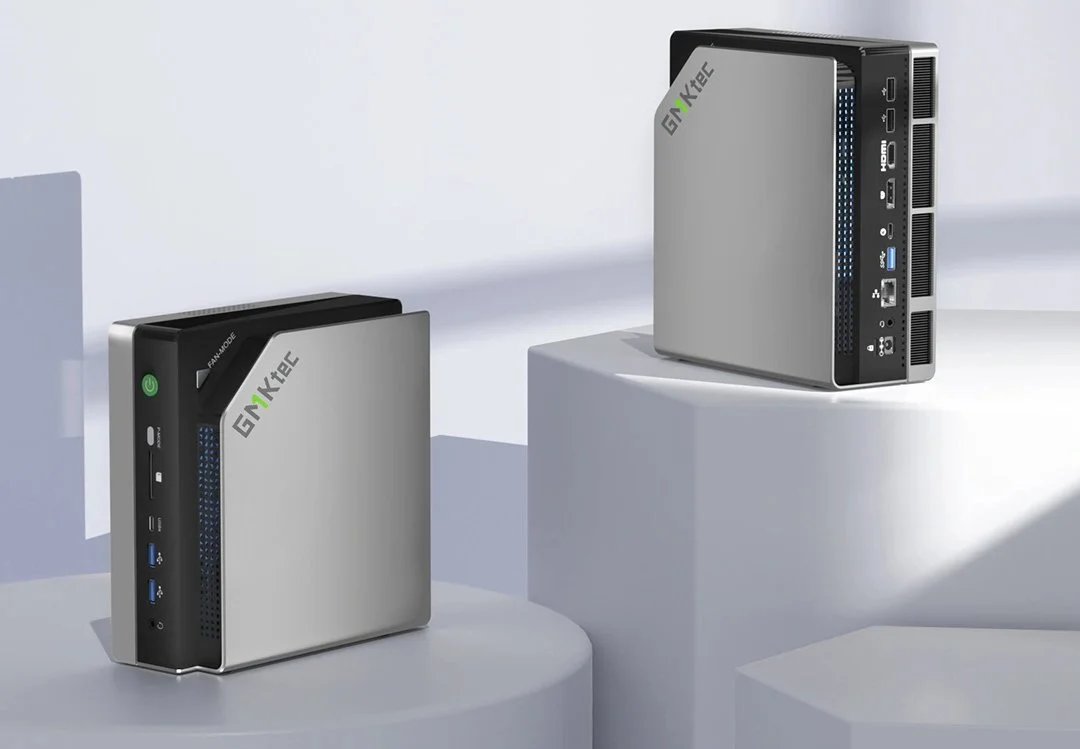
“Medusa Halo” is the codename for AMD’s successor to the Strix Halo APU that currently powers the Ryzen AI Max+ 395 found in machines like the HP ZBook Ultra G1a, the Framework Desktop, the GMKtec EVO-X2 and the Minisforum MS-A2 / N5 Max. Where Strix Halo paired Zen 5 with RDNA 3.5, Medusa Halo will pair AMD’s next-generation Zen 6 cores with RDNA 5 graphics and a next-gen XDNA NPU, all glued together on a chiplet package that AMD has positioned as its top-tier mobile / SFF platform.
In AMD product-stack terms, it is widely expected to ship as the Ryzen AI Max 500 series, i.e. the natural step up from today’s AI Max 300 / “395” parts. It is not aimed at thin-and-light Copilot+ laptops (that slot belongs to “Medusa Point”); it is aimed at the niche Strix Halo created: workstation-class mini PCs, mobile workstations, AI-development boxes and high-end NAS-style appliances that want a discrete-GPU replacement and a fat memory pool in one socket.
What we know (and what is still leak-tier)
The architecture-level pieces are mostly confirmed by AMD via its public roadmap and analyst-day slides; the SKU-level specs are still leaks, primarily attributed to Moore’s Law Is Dead and the leaker “Olrak29_”. A reasonable summary of the current picture:
- CPU: Zen 6. AMD has officially confirmed Zen 6 is built on TSMC’s N2/N2P node for the CPU CCDs, with the I/O die expected on N3P. AMD says Zen 6 brings higher IPC, better efficiency and expanded AI data-type support (more on-CPU AI pipelines).
- Core count: up to ~24 “big” Zen 6 cores. The flagship Medusa Halo is leaked as 2× 12-core CCDs, optionally with 2 Zen 6 LP (low-power) cores on the I/O die, so depending on how you count, headline figures of “24C/48T” or “26 cores” are both circulating. A second SKU called Medusa Halo Mini is leaked as a hybrid 4× Zen 6 + 8× Zen 6c + 2× Zen 6 LP configuration. Core counts are not confirmed by AMD.
- GPU: RDNA 5, up to 48 CUs. The flagship is leaked with 48 RDNA 5 Compute Units and 20 MB of GPU L2 cache: the same CU count as Strix Halo but on a newer architecture with FSR 4-class AI upscaling and improved ray tracing. The Mini variant drops to 28 CUs / 10 MB L2.
- NPU: next-gen XDNA. AMD has publicly committed to a next-gen XDNA NPU on the Medusa generation, but the actual TOPS figure has not been disclosed. Today’s Strix Halo XDNA 2 is rated at 50 TOPS (INT8). It is reasonable to expect Medusa to push well past that, but treat any specific TOPS number you see online as unconfirmed.
- Memory: LPDDR6, possibly on a 384-bit bus. This is the big one. Leaks point to LPDDR6 at up to ~14,400 MT/s, vs LPDDR5X-8000 on Strix Halo. On the same 256-bit bus Strix Halo uses, that is roughly 460 GB/s of peak bandwidth (~80% over Strix Halo’s ~256 GB/s). If AMD widens the bus to 384-bit (as some leaks claim), peak bandwidth jumps to roughly 691 GB/s, which would put a single-socket mini PC into the same memory-bandwidth bracket as a low-end discrete GPU board.
- Process: TSMC N2P (CPU) + N3P (IOD). Confirmed at the family level by AMD; specific Medusa Halo die-allocation is leak-tier.
What it means for mini PCs
If even the conservative version of these specs ships, Medusa Halo is a step-function upgrade for the mini PC category in three concrete ways.
1. Memory pools could finally clear the 256 GB bar. Strix Halo today tops out at 128 GB unified LPDDR5X soldered. With LPDDR6 density improvements and a wider bus, 256 GB unified configurations become plausible for AI-development mini PCs, and that is exactly the size where you stop having to quantize 70B-class models aggressively. Note that 256 GB is not in any leaked SKU sheet yet; it is an architectural possibility, not a confirmed product.
2. Local LLM inference stops being bandwidth-starved. Strix Halo is already a remarkable local-LLM box, but its ~256 GB/s of bandwidth is the bottleneck once you exceed ~30B-parameter models. A ~460–690 GB/s LPDDR6 setup would bring token-generation throughput on dense 70B models into a range that today requires a workstation-class discrete GPU or NVIDIA’s DGX Spark. That is a meaningful change in what a 1-liter chassis can credibly do.
3. The Copilot+ NPU floor becomes a non-issue. Microsoft’s Copilot+ certification currently asks for 40 TOPS of NPU. Strix Halo at 50 TOPS already clears it. A next-gen XDNA Medusa NPU will almost certainly leave that bar far behind, which is interesting not because Copilot+ matters per se, but because it expands the headroom for on-device transcription, vision and small-model inference running alongside the iGPU.
What it does not change: thermals and acoustics. Strix Halo already pushes 120 W in some chassis; Medusa Halo’s bigger CPU/GPU complex will not get easier to cool in a Minisforum-sized box. Expect the first Medusa Halo mini PCs to be physically larger and louder than the current “395” generation, not smaller.
Expected timeline and SKUs
The roadmap picture, as of mid-2026, looks like this:
- 2026: A rumored Strix Halo refresh (sometimes called “Gorgon Halo” or simply Ryzen AI Max 400 series) is expected to bridge the gap: same Zen 5 / RDNA 3.5 architecture with binning, clock and possibly memory tweaks. AMD has not officially confirmed this refresh.
- H2 2027: Most credible leaks (Tom’s Hardware, NotebookCheck, HotHardware citing MLID and Olrak29_) put Medusa Halo’s launch in the second half of 2027, alongside the broader Medusa Point laptop family.
- 2028: A minority of reports (notably HWCooling.net) push the true Zen 6 Halo product to CES 2028, with 2027 reserved for the refresh and for Medusa Point. Treat both timelines as possible until AMD says otherwise.
On the OEM side, the natural shortlist of mini PC vendors to ship Medusa Halo first is essentially the same one that picked up Strix Halo: HP (ZBook Ultra successor), Framework (Framework Desktop is explicitly designed around this socket class), GMKtec, AOOSTAR, Beelink, and on the NAS / appliance side Minisforum’s N-series. AMD itself is also pushing a first-party Ryzen AI Halo ROCm development mini PC for the current generation, and is likely to extend that program into Medusa.
Sources and caveats
The single most important caveat for this entire article: almost nothing here is officially confirmed at the SKU level. AMD has confirmed Zen 6, the 2 nm process node, RDNA 5 and a next-gen XDNA NPU at the architecture level. Everything else (the 24-core flagship, the 48 CU GPU, the LPDDR6 speed, the 384-bit bus, the H2 2027 launch window) comes from leaks (primarily Moore’s Law Is Dead and Olrak29_) that have been re-reported by Tom’s Hardware, HotHardware, VideoCardz, NotebookCheck and others.
Specifically unconfirmed, as of 27 May 2026:
- Exact CPU core configuration (24 vs 26, classic vs LP, single vs dual CCD)
- Exact memory bus width (256-bit vs 384-bit)
- NPU TOPS rating
- Final launch date (H2 2027 vs 2028)
- Whether 256 GB unified memory configurations will actually ship
If you are buying a mini PC today on the basis that “Medusa Halo is right around the corner,” you are betting on a 12-to-24 month wait minimum, and on leaks that have a non-trivial chance of being wrong. Strix Halo (Ryzen AI Max+ 395) remains the right buy for anyone who needs that class of machine in 2026.