
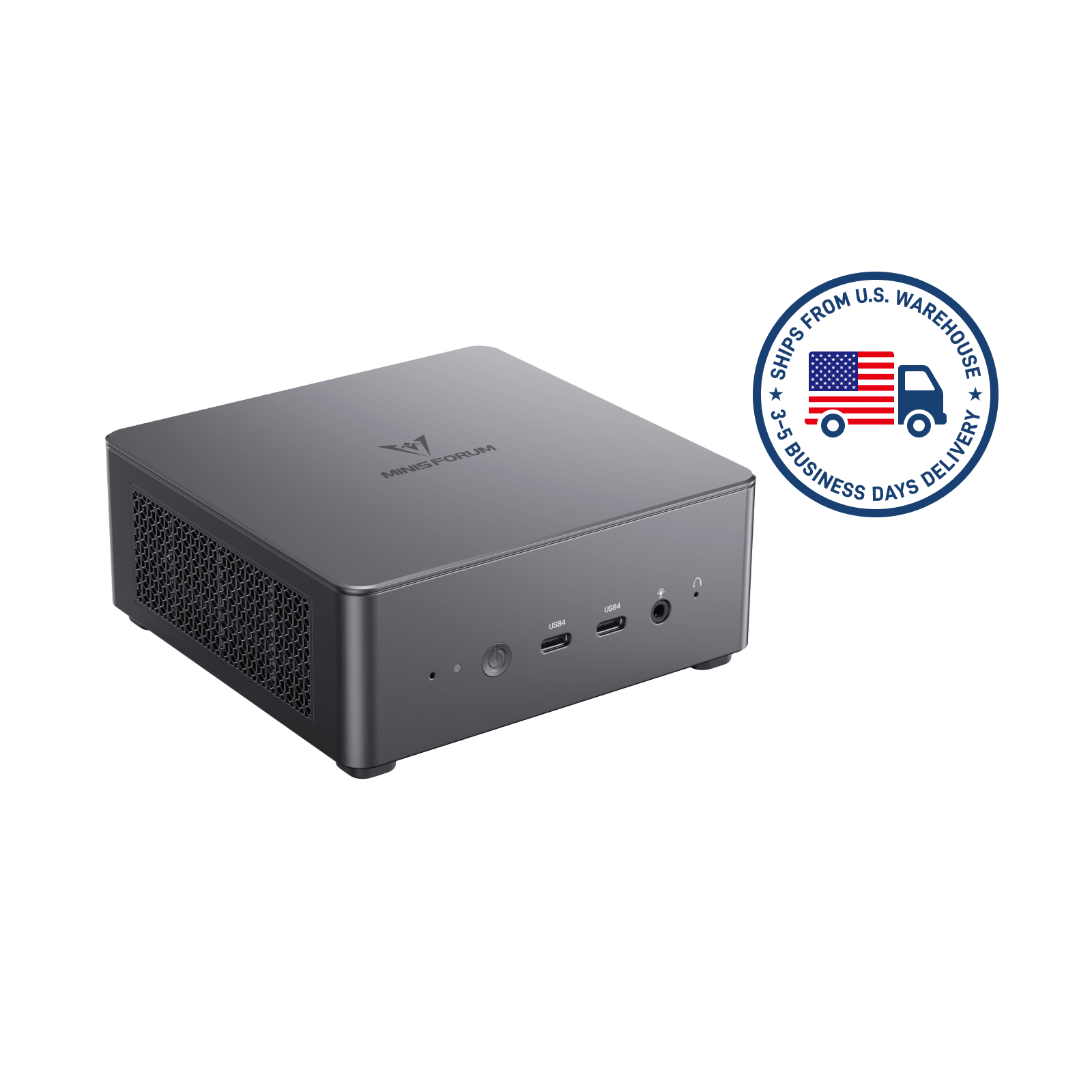
The most useful thing to say about iFixit, before getting into the specifics of the UM773 Lite, is that it is a strange place for a mini-PC conversation to end up. iFixit is a consumer-electronics repair authority. Its answers forum is populated by volunteers who are good at their craft: technicians who know how to identify a shorted MOSFET on a power rail, who understand the reflow tolerances of modern BGA packages, and who are comfortable explaining which components a home user can reasonably replace and which ones they cannot. A product that is working as intended, supported by its vendor on an ordinary warranty path, does not generate iFixit questions. That forum fills up with products where the vendor’s support path has broken down and the customer has nowhere else to go.
The Minisforum UM773 Lite generated one of those questions.
What the iFixit thread describes
A UM773 Lite owner posted an iFixit answers thread asking for help diagnosing a unit that had stopped powering on entirely. No boot. No POST. No response to the power button. The troubleshooting path the community walked the owner through arrived at a specific finding: two components on the motherboard (identified on the thread as being on the power-delivery rails) had fried themselves. The resulting board was electrically dead in a way that no BIOS reset, no reseating of memory, no swap of storage, could recover. The repair, in the view of the volunteer who answered, would require board-level soldering work and the specific components to replace the fried ones, work that is within a skilled technician’s capability but well outside a normal consumer’s.
That framing (fried components on the power rails, board-dead, no recovery without physical repair) is important because it describes not a peripheral failure but a foundational one. A dead NVMe can be replaced. Dead RAM can be swapped. A failed CPU is unusual but addressable on a socketed platform. A burned power stage on a soldered-CPU mini-PC motherboard is, for most owners, the end of the machine.
The surrounding pattern
The Minisforum BBS thread on UM-series boot issues and UASP crashes captures adjacent symptoms on UM-series hardware: full-system freezes, boot failures under specific storage-controller configurations, and USB subsystem collapses that, left long enough, are precisely the kind of pattern that precedes an eventual power-stage failure. None of that is unique to the UM773 Lite, and none of it is direct evidence of the same fried-component failure mode seen in the iFixit case. It is the surrounding weather: the steady drip of “my unit stopped responding” that establishes the context in which the iFixit thread becomes the latest entry.
iFixit’s own repairability scoring for mini-PCs sits alongside this as a structural complaint. The mini-PC category as a whole is not designed for repair. Components are soldered. Thermal interface is a disassembly hazard. Replacement parts are not commercially available through vendor channels. That has been true across the category, and it isn’t a Minisforum-specific sin. The question is what the vendor does about it.
What “2-year warranty” costs the Minisforum UM773 Lite owner
Here is where the UM773 Lite case sharpens. Minisforum’s published warranty covers the unit for two years from purchase. For a unit that dies inside that window, the theoretical remedy is a warranty claim. The practical remedy, for a customer with a UM773 Lite that died after, say, fourteen months of ownership, is:
- Open a warranty ticket with Minisforum support. Expect a turnaround measured in weeks rather than days.
- Ship the dead unit to Hong Kong or mainland China at the customer’s expense. Minisforum’s warranty policy puts return shipping on the customer after the first week. For a customer in the EU, UK, US or APAC, expedited courier with insurance on a mini-PC can easily be $80–$150 one way. Customs and duty handling on the return leg can add to that.
- Wait for inspection and either a repair or replacement. Total cycle time is often two-to-four months end-to-end.
For a $400–$500 unit, the shipping cost alone is a material fraction of the product’s value, and the cycle time means the customer is without their machine for a meaningful chunk of the year. That is the math that produces iFixit threads. A customer who has done this arithmetic at their kitchen table and decided that shipping a dead UM773 Lite back to China is economically unappealing chooses the other path: try to repair it locally, or throw it away.
Related: the Minisforum MS-01 VRM fire and the warranty-versus-Amazon replacement path, Minisforum’s EU warranty depreciation fees and the pattern of Minisforum support unresponsiveness.
The lasting part
The thing that stays with you after reading the iFixit thread is not the specific failure (power stages fail on every computer platform at some non-zero rate) but the destination the customer reached to ask about it. A vendor whose post-sale experience is well-calibrated does not have owners posting on third-party repair sites asking strangers to help them bring their machines back from the dead. A vendor whose post-sale experience is not well-calibrated produces exactly that traffic.
The UM773 Lite owners are on iFixit because the cost of doing it the right way, the vendor’s way, is higher than the price of the machine itself. That sentence is the quiet indictment of everything wrong with the post-warranty reality of this product line. Nothing Minisforum says on its marketing pages changes the math on the customer’s kitchen table.