
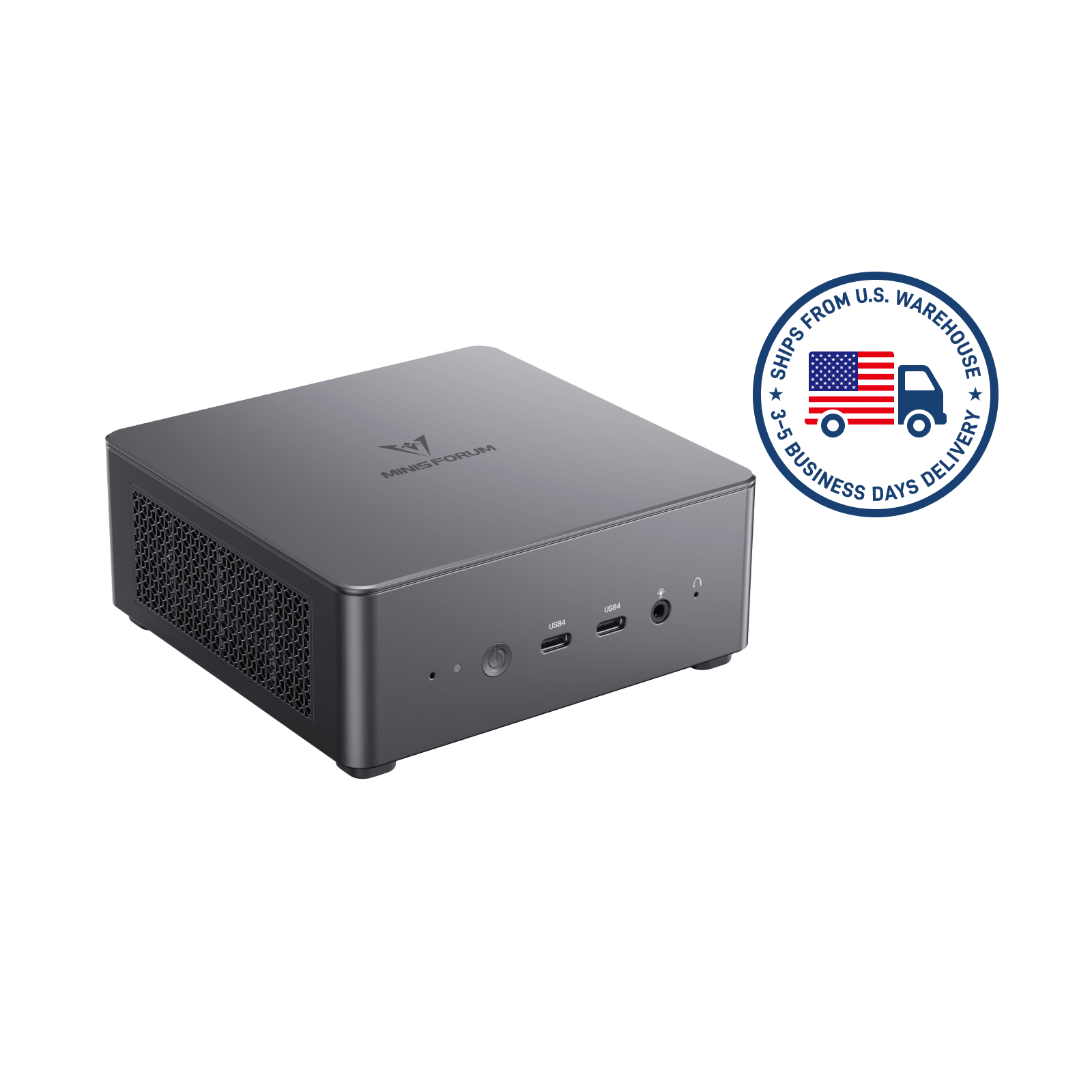
There is a quiet conversation happening in the local-LLM community that the mini-PC press has mostly missed: the cheapest serious machine for running 70B-class models on your desk in 2026 is not a GMKtec Strix Halo box, not a tiny RTX 4070 mini-PC, and not a used Mac Studio. It is the Apple Mac Mini with M4 Pro and 64 GB of unified memory, configured at roughly $2,000. For the specific job of running a quantized Llama or Qwen 70B locally, with mature software, on a machine that draws less power than a desk lamp, nothing else in that price band is close.
That is a strong claim, and it deserves the usual cautions. So here is the boring, documented version.
Apple Mac Mini M4 Pro: what the hardware actually is
The Mac mini’s M4 Pro option ships with either a 12-core or 14-core CPU, a 16-core or 20-core GPU, and a 16-core Neural Engine. According to Apple’s own spec page and corroborated on the M4 Wikipedia entry, the M4 Pro provides 273 GB/s of unified memory bandwidth and supports up to 64 GB of unified memory, meaning the CPU, GPU and Neural Engine all read from the same pool, with no PCIe round-trip.
Apple’s October 2024 launch announcement puts the entry M4 Pro Mac mini at $1,399 (12-core CPU, 24 GB unified memory). The 64 GB upgrade (which is what matters for local LLM work) pushes the build to roughly $2,000 depending on storage. There is no third-party RAM here; the memory is on-package, and you choose at checkout or you live with it.
For a 5-inch-square box that idles near silent and pulls under 100 W under load, that bandwidth figure is the headline. The Strix Halo platform that powers boxes like the GMKtec EVO-X2 tops out around 256 GB/s and goes higher on memory capacity (up to 128 GB). A discrete RTX 4090, by contrast, sits near 1 TB/s. Memory bandwidth is the single most important number for token-generation throughput on a transformer model, because inference is bandwidth-bound, not compute-bound, a fact the llama.cpp community has documented in its long-running M-series benchmark thread since the M1 era. The M4 Pro sits in a strange middle ground: faster than every “AI PC” mini-PC, much slower than any modern dGPU, but with vastly more usable memory than a 4090 mini-PC at the same price.
What the software stack looks like in 2026
Apple Silicon’s local-LLM story used to be “llama.cpp Metal backend, hope for the best.” That has changed. Apple’s own MLX framework (a NumPy-style array library tuned for unified memory) now has stable inference support for the major open-weight families (Llama, Qwen, Mistral, Gemma) and is the basis of Apple’s own published research on running LLMs efficiently on M-series GPUs. Tools like LM Studio, Ollama and llama.cpp ship Metal backends that run out of the box. There is no driver dance, no ROCm version-pinning, no XDNA toolchain to assemble.
That maturity is the part of the comparison that does not show up in spec sheets. It is also the part that has shifted in Apple’s favour over the past 18 months.
What 64 GB actually runs, with sourced numbers
The honest tok/s picture for a 64 GB M4 Pro looks roughly like this, based on independent reports:
- Llama 3.3 70B at 4-bit (MLX, ~40 GB resident): developer Bharani Manoharan, running on a 20-core-GPU Mac mini M4 Pro with 64 GB, reported ~5 tok/s and called it “admirable considering the machine fits in the palm of my hand.” Simon Willison, writing about a comparable Llama 3.3 70B 4-bit setup on a 64 GB MacBook Pro M2 Max, documented similar single-digit token rates and described the experience as “GPT-4 class, on my laptop”: usable for batch jobs, marginal for live chat.
- Smaller 30B-class models: community benchmarks aggregated in the llama.cpp Apple Silicon thread and other community testing put models in the 14B–32B range at 11–25 tok/s on M4 Pro, comfortably interactive.
- 7B–8B models: well above 50 tok/s, often into the triple digits, faster than a human can read.
A 70B model at 4-bit fits in 64 GB, but barely. A 70B model at Q5 or Q6 quantization does not, full stop. That is the ceiling of this machine and worth being explicit about: 64 GB unified is the floor of the 70B class, not a comfortable home for it.
The honest comparison
Against a GMKtec EVO-X2 / Strix Halo box, the M4 Pro Mac mini gives up memory ceiling (64 GB vs up to 128 GB) but wins decisively on software maturity in early 2026. ROCm and the XDNA NPU stack on Strix Halo are improving, but they are not yet in the “install and it works” category that MLX, Metal and Ollama already are on Apple Silicon. If your workload is “I want to run a 70B-class quant tonight,” the M4 Pro is the safer bet. If it is “I want headroom to run a 100B-class model in two years,” Strix Halo’s bigger memory pool wins.
Against a mini-PC with a discrete RTX 4070 / 4070 Ti, the comparison flips depending on model size. The dGPU box wins on per-token speed at small and mid models and crushes the Mac on image generation and any CUDA-only research code. The Mac wins on every model that does not fit in 12–16 GB of VRAM, which is most things worth running locally in 2026.
Against an older Mac Studio M2 Ultra, the M4 Pro Mac mini is roughly a quarter of the price for similar memory bandwidth, but capped at 64 GB instead of 192 GB. For the 70B-class job, it is dramatically better value. For 100B+ MoE models, the Studio is still the only Apple machine that fits.
AppleInsider’s review of M4 mini clusters is also worth reading before romanticising the Thunderbolt-cluster idea: linking two M4 minis is a fun project but rarely beats a single better-specced machine for inference, because cross-node bandwidth becomes the bottleneck the unified pool was supposed to solve.
The limits, stated plainly
Three honest debits.
First, CUDA is not optional for a meaningful slice of the AI ecosystem. vLLM, TensorRT-LLM, much of the long-tail research code on GitHub, and many image-generation and video-generation pipelines assume an NVIDIA card. None of that runs on a Mac. If your work requires a specific CUDA-only project, this box is the wrong answer no matter how good its bandwidth is.
Second, the memory upgrade pricing is famously punitive. Going from the 24 GB base to 64 GB costs roughly $800, RAM that, in a normal PC, would cost a fraction. You are paying Apple’s tax for the privilege of unified memory, and there is no aftermarket fix.
Third, 64 GB is the exact line where 70B-class models barely fit. The moment you want longer context, a higher quantization, or a model in the 100B+ MoE class, you are out of room and shopping for a Mac Studio or a Strix Halo box with 96–128 GB.
The takeaway
The Mac Mini M4 Pro 64 GB is not the fastest local-LLM machine you can buy. It is not even close. What it is, in the spring of 2026, is the cheapest machine that can host a 70B-class model on your desk with software that works the day you plug it in, and it does so in a footprint that fits next to a monitor without a fan you can hear. For people whose actual workload is “run open-weight models locally, every day, without CUDA-only dependencies,” nothing else under $2,000 is in the same conversation. The upgrade-tax and the CUDA gap are real costs, and anyone buying this machine should understand them before they pay. But the tradeoff, on balance, is the most favourable Apple Silicon has ever offered the local-AI crowd.