
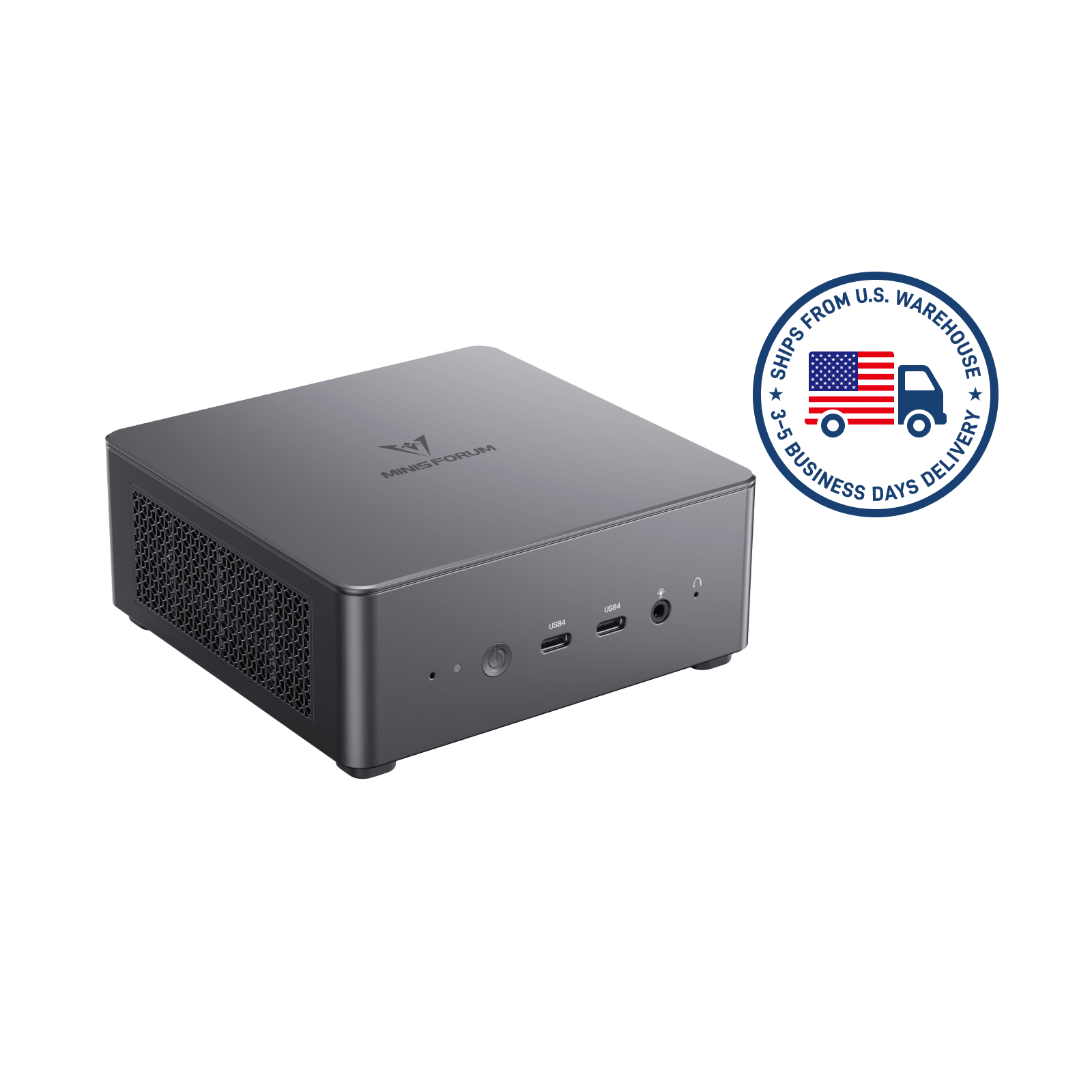
The first thing to say about Minisforum’s Japanese market posture is that it has been improving. Through the distributor Links International, Minisforum announced in early 2026 an extension of the Japan-market warranty period to three years, longer than the two-year standard that applies in North America and Europe. That is not a trivial commitment. A Japanese consumer-electronics market where companies like Panasonic and Mitsubishi Electric routinely offer long warranties as a sales differentiator sets a high baseline, and Minisforum’s decision to meet that baseline (to offer the longest warranty in its own product category in Japan) is the kind of step that improves the pre-purchase calculus for a serious buyer.
That is the matiz. The rest of the story is about the operational infrastructure behind the warranty number, which is where Japanese buyers have been posting evidence that the rest of the picture has not kept pace.
What the Japanese sources document
The pattern is most visible in first-person blog posts on note.com and on the enthusiast marketplace kakaku.com. A Japanese note.com post by superzz titled “ミニPC不調サポートの顛末”, loosely “the end result of mini-PC trouble support,” walks through the author’s support-interaction sequence after their unit malfunctioned. The critical detail: Minisforum’s support response, at multiple points in the interaction, was to explain that the specific replacement part the customer needed could not be shipped to them, and to ask the customer to purchase the part themselves. For a warranty claim on a unit still inside the coverage window, this is not a supplementary arrangement; it is a transfer of the warranty obligation back to the customer.
A kakaku.com thread dedicated to an HX90 that stopped turning on captures the other face of the pattern: a user documenting a complete-failure symptom and the resulting support cycle on one of Japan’s largest technology price-comparison and review platforms. The thread is indexed, which means prospective Japanese buyers searching “HX90” on kakaku.com encounter the support-cycle narrative alongside the specifications, exactly the kind of organic search-result pairing that shapes brand reputation in a market where consumers routinely research across multiple platforms before purchase.
A separate note.com post, titled “MinisForum、すぐに壊れた!” (Minisforum, it broke almost immediately) captures the short-tenure failure narrative directly in its title, a formatting choice that maximises visibility in Japanese search-engine results and that reflects the author’s intent to warn rather than to discuss.
The meta-analysis post
The dosukoibakuhu.com post titled “Minisforum壊れやすい説を調査”, “investigating the theory that Minisforum breaks easily,” is the article that reads closest to what a Japanese consumer researcher would assemble before recommending or declining to recommend the brand. The post gathers individual failure reports, cross-references them with warranty-interaction testimonies, and arrives at the conclusion that the brand-is-unreliable theory is not definitively proven but that the pattern of premature failures combined with inconsistent support response is well-documented enough that a cautious buyer should assume the worst case when budgeting.
That is, in effect, a Japanese-market consumer-journalism piece doing the same work this article series is doing in English. The existence of it is the part that matters: Japanese buyers are already reading a structured assessment of the brand’s failure-and-support pattern, and the assessment is not favourable. Related: Minisforum’s after-sales gap for Korean buyers, EU warranty depreciation fees, and the support-unresponsiveness pattern.
What a longer warranty doesn’t fix
The 2026 three-year warranty extension, as announced through Links International, is a number change. Numbers on a product page do not independently generate customer-service outcomes; they create a contractual obligation whose real value depends entirely on the operational infrastructure behind it. For a buyer whose unit fails in month 28 (ten months past the old warranty and still inside the new one), the value of “three years” resolves in one of two ways:
The optimistic read. Minisforum uses the extended warranty period as a forcing function to build out Japanese parts-supply infrastructure, enabling Links International to ship replacement parts to affected customers without the “please purchase the part yourself” workaround that note.com bloggers have documented. The longer warranty becomes a real longer warranty.
The pessimistic read. The extended number is a sales-differentiator change that doesn’t carry a matching investment in parts-supply pipeline. Customers in month 28 encounter the same refuse-to-ship-the-part experience that customers in month 12 have been documenting, with the brand’s marketing now claiming a longer coverage window that the operational reality doesn’t support. This is the scenario several Japanese bloggers are explicitly writing about, and the one kakaku.com threads are implicitly warning future buyers about.
The lasting question for Japanese buyers
The warranty number is cheap to change. The parts-supply pipeline is expensive to build. If Minisforum does both, the 2026 change is a genuine improvement; if it does only the first, the longer warranty is a contractual promise that the company’s Japanese operations cannot reliably deliver on.
The evidence so far (multiple independent bloggers, multiple kakaku.com threads, and a meta-analysis post that reads the pattern directly) is that the operational side of the Japanese support experience has not caught up with the branding side. Japanese buyers reading this should weight the recent warranty extension against the documented experience of the buyers whose units have already failed, and understand that “three years” means what the parts-supply pipeline can back up, not what the product page advertises. Until the note.com posts stop showing up (until the pattern in the Japanese consumer-forum record changes), the honest read of a Minisforum warranty in Japan is that its real duration is whatever length of time the parts pipeline can service, and that length is, on current evidence, shorter than what the marketing claims.