
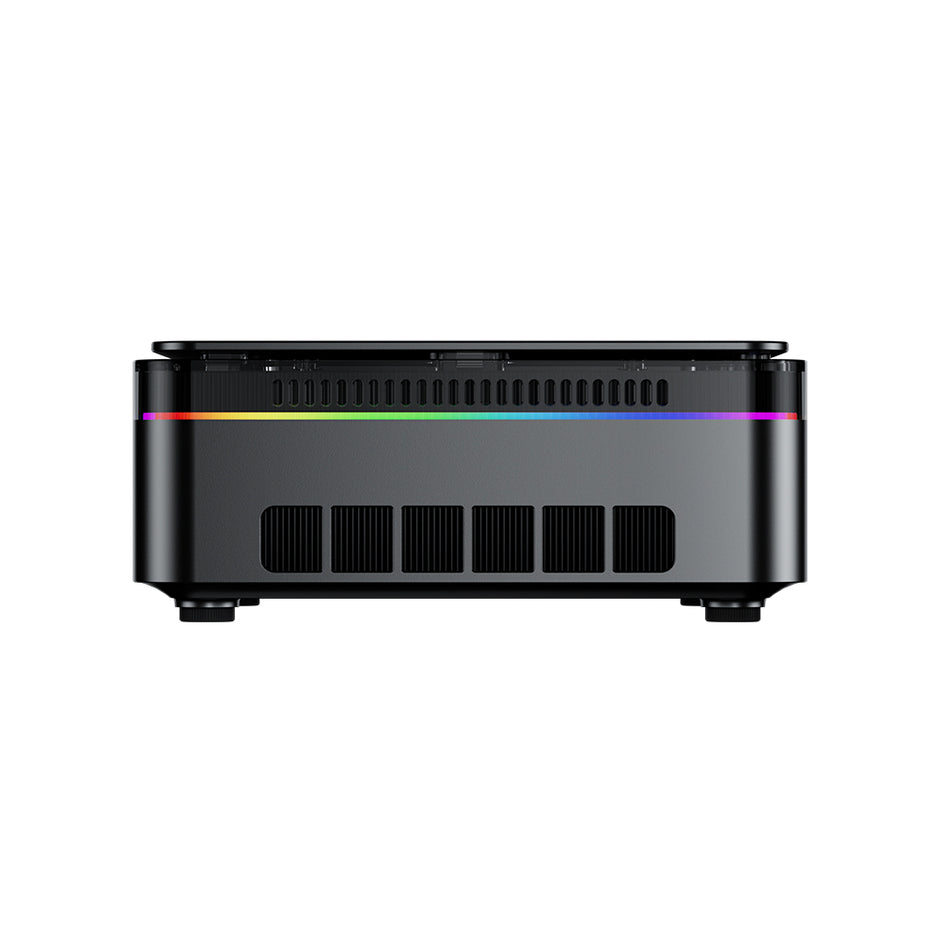
There is a version of this story where AceMagic looks good. It is worth telling that version first, because it is real. In February 2024, after independent researchers and YouTubers demonstrated that brand-new AceMagic AD08, AD15 and S1 mini-PCs were arriving with malware baked into the factory Windows image, the company did something unusual for the category: it issued a written statement, named the affected SKUs, and accepted responsibility. In an industry where China-based brands routinely respond to defects with a single polite email and a quiet exchange, “we shipped malware and here is the list” is not a default behaviour. AceMagic did it. The Register published the statement in full, and the line that drew the most attention reads: “To enhance the boot time of the software, our developers, without my approval, made adjustments to the Microsoft software.”
That sentence is the high-water mark of the AceMagic malware story. Everything downstream of it is less flattering.
What was actually on the machines
The malware was not subtle. According to BleepingComputer’s reporting, the factory Windows image on affected units contained two distinct families of credential-stealing software (variants identified as Bladabindi and Redline), embedded in a way that survived a normal first-boot setup. Bladabindi is a long-running backdoor that exfiltrates credentials and supports remote access; Redline is one of the most prolific commodity infostealers of the last several years, designed to hoover up browser passwords, autofill data and crypto wallet files within minutes of running.
The discovery did not come from AceMagic’s own QA. It came from the outside. The YouTuber Jon Bringus and a separate channel, The Net Guy Reviews, independently demonstrated detections on units they had purchased before any vendor advisory existed. By the time AceMagic published its statement, the videos were already in the public record and Tom’s Hardware, PCMag and XDA Developers had all reported the story. The acknowledgement was, in effect, the second move, not the first.
What the statement actually says, and what it doesn’t
Read carefully, AceMagic’s explanation contains a specific claim: that the malware was a side-effect of in-house developers modifying the Microsoft Windows image to “enhance boot time,” and that this happened “without my approval” (the “my” referring to the company principal who signed the statement). The framing places the cause inside the company but outside the executive’s awareness, and reframes the malware as an unintended consequence of optimisation work rather than a supply-chain compromise.
It is a tidy story. It is also one the public has no way to verify. The statement does not name the developers, does not publish the exact pre-shipment image hash, and does not explain how a routine “boot time optimisation” produced a binary that exfiltrates browser credentials to a remote server, behaviour that is not adjacent to startup performance work in any honest reading. The Register noted the gap politely; BleepingComputer noted it less politely. Neither outlet was given access to a forensic timeline.
There is a second silence. AceMagic confirmed that “some” units of the AD08, AD15 and S1 were affected, but the statement did not publish a serial-number range, a production-date window, or an absolute count of compromised machines. A buyer who purchased one of these models in late 2023 or early 2024 has no first-party way to determine whether their specific unit was in scope. The remediation guidance (reinstall Windows from a clean Microsoft image) is correct, but it is also the same advice an unaffected owner would receive, which means the boundary of the incident is not where AceMagic drew it; it is wherever buyers decided, individually, to assume the worst.
What “remediation” looked like in practice
AceMagic’s published fix was a clean Windows reinstall using a Microsoft-sourced ISO, plus assurance that subsequent production batches had been re-imaged. That is the correct technical answer for an infected boot image. It is also a remediation that places the labour on the customer.
A reinstall is not a trivial ask for the typical mini-PC buyer. The AD08, AD15 and S1 sell into a market that includes home users, small-office deployments, kiosk and signage operators, and gift purchases: categories whose buyers chose a pre-built specifically to avoid building, imaging or configuring a Windows machine from scratch. For those buyers, “download an ISO, create installation media, wipe the drive, reinstall, reactivate, restore your data” is a half-day of work that they did not budget for and were not warned about at the point of sale.
There is no public record of AceMagic offering refunds, extended warranties, or credit-monitoring assistance to affected buyers, the standard package of remedies that hardware vendors in regulated markets typically extend after a confirmed credential-stealer incident. PCMag’s coverage and XDA’s reporting both noted the asymmetry: the company accepted responsibility in language, then asked the buyer to do the cleanup in practice.
The credit, and the cost of the credit
AceMagic deserves credit for naming the affected models in writing and for not pretending the issue was a third-party reviewer’s mistake. In a category where the default response to a defect is silence followed by a unit swap, that matters; it is the nuance this article opened with, and it is genuine.
The cost is what the statement did not contain. There is no published forensic timeline, no production-date window, no count of affected units, no proactive notification to buyers on file, and no offer of credit monitoring for owners whose browser passwords may have been exfiltrated weeks or months before the public statement. A fair accounting of the AceMagic malware incident is not “AceMagic did the right thing”; it is “AceMagic said the right thing, and buyers did the rest of the work.” If you bought an AD08, AD15 or S1 in the affected window and never reinstalled Windows, the prudent assumption, two years later, is still that the credentials on that machine should be rotated. That is the version of the story most coverage closed without finishing, and it is the version that belongs on the record next to the apology.